
janvier 28, 2026
PRESENTATION GENERALE DE L’ACPADEL Créer en janvier 2021, l’ACPADEL est une organisation de développement locale dont les actions sont orientées...
Over two decades of operations, the company has gradually established itself as a key player in the timber sector in the Centre Region, while simultaneously developing initiatives to support employment, infrastructure, and local communities. Its track record is also marked by collaboration with forestry authorities and support for Civil Society Organizations (CSOs) particularly regarding compliance with legal, social, and environmental obligations and the implementation of Standards for Intervention in Forest Environments (NIMF). ACPADEL (Community Action for Support to Indigenous Peoples and Local Development) looks back on twenty years of presence, commitment, and contribution to local development in Ngambé-Tikar.
Established in the district in 2004, the Scierie of Mbam and Kim (SMK) has gradually established itself as a key player in the timber industry within this part of the Centre Region, as well as one of Cameroon’s major exporters. In 2024, the company marked the milestone of 20 years of operations in a territory where the economy relies heavily on agriculture, natural resource exploitation, and forestry activities.
This long-standing presence underscores the importance of the forest-wood sector to local economic development. Data from government authorities and studies on the forestry sector confirm that the company is one of the primary industrial wood-processing facilities in the Mbam-et-Kim department. Specifically, it is identified as a wood-processing unit with secondary processing capabilities, carrying out sawing and drying operations for sawn timber.Today, it positions itself as a key player in the region’s timber harvesting and processing sector, contributing to the vitality of the local economy and generating income for many households.
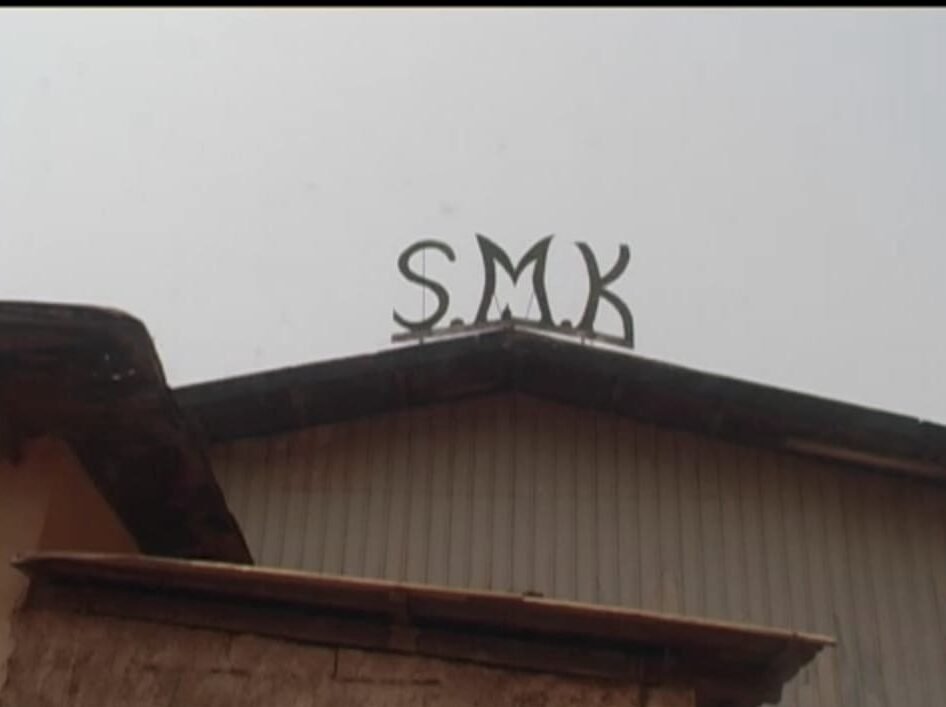
A necessary Partnership with the forestry administration: As forestry operations are heavily regulated, collaboration between the SMK and the government forestry authorities is a key element of sustainable forest resource management.
Since its early years of operation, the company has navigated an environment characterized by administrative oversight, the monitoring of logging permits, compliance with technical specifications, and the need to ensure the traceability of forest products. Notably, forest monitoring activities dating back to 2005 have documented interactions with the local forestry station chief, as well as inspections of the sawmill and logging operations.Today, This Partnership must now be viewed from a broader perspective: that of the continuous improvement of compliance, transparency, and the responsible management of forest resources. The company already meets all the requirements relating to the EUDR regulations governing timber exports to foreign countries, particularly to European countries.
The role of Civil Society Organizations (CSOs): supporting, advising, and promoting legality : Alongside the forestry administration, Civil Society Organizations (CSOs) also play a significant role in improving forestry sector practices in Ngambé-Tikar. The advisory support provided by these organizations does not replace State oversight; rather, it aims to assist forestry companies in understanding and complying with their social and environmental obligations, as well as in applying the Standards for Intervention in Forest Environments (NIMF).
These interventions focus in particular on raising awareness of forest legality, taking local communities into account, environmental protection, compliance with specifications, and improving dialogue among companies, communities, the administration, and civil society.
A particularly notable experience is the project titled « Local System for Monitoring Forestry Activities in the District » (SYLOSAF), implemented by the Centre for Support to Women and Rural Populations (CAFER) with financial backing from the European Union (EU) and linked to the FLEGT VPA mechanisms. Under this initiative, forestry entities underwent an assessment based on rigorous criteria covering, in particular, their practices, relationships with communities, social and environmental obligations, and compliance with regulations.
SMK, best forestry entity in Ngambé-Tikar in 2013: It was against this backdrop that, in 2013, SMK received the award for « Best Wood Processing Company in the Ngambé-Tikar District » a distinction conferred by the supporting organization as part of the implementation of the SYLOSAF-EU initiative.This recognition, achieved based on rigorous evaluation criteria, marks a significant milestone in the company’s history. It reflects the efforts made by the Italian firm at that time regarding forestry practices, stakeholder relations, and the management of responsibilities associated with its operations.
More broadly, this distinction highlights the value of a local monitoring mechanism involving government authorities, businesses, communities, and civil society organizations, aimed at fostering forestry operations that better align with legal and environmental requirements.
SMK, best forestry entity in Ngambé-Tikar in 2013: It was against this backdrop that, in 2013, SMK received the award for « Best Wood Processing Company in the Ngambé-Tikar District » a distinction conferred by the supporting organization as part of the implementation of the SYLOSAF-EU initiative.This recognition, achieved based on rigorous evaluation criteria, marks a significant milestone in the company’s history. It reflects the efforts made by the Italian firm at that time regarding forestry practices, stakeholder relations, and the management of responsibilities associated with its operations.
More broadly, this distinction highlights the value of a local monitoring mechanism involving government authorities, businesses, communities, and civil society organizations, aimed at fostering forestry operations that better align with legal and environmental requirements.
Nearly 500 direct jobs: a major economic impact: Beyond wood processing, one of the most visible contributions to the local economy is job creation. The company currently accounts for nearly 500 direct jobs, making it one of the borough’s major private-sector employers.
Behind this figure lie hundreds of families whose income depends—directly or indirectly—on the company’s operations: manual workers, technicians, drivers, administrative staff, mechanics, maintenance personnel, and other service providers. A stable job enables a household to consistently pay for children’s schooling, improve housing, access healthcare, invest in agriculture, or even develop small-scale commercial activities. The economic impact thus extends beyond the company’s own employees, rippling out into local markets, transport, services, and agricultural activities
Social investments that directly impact communities: The contribution of the Mbam et Kim Sawmill to local development extends beyond job creation. The company has also carried out or supported various social initiatives for the benefit of local communities. Key achievements include: (i) The rehabilitation of rural and local roads spanning hundreds of kilometers, facilitating the movement of people and the transport of agricultural produce to markets; (ii) Support for the construction of the Ngambé-Tikar Second-Class Chiefdom—amounting to approximately 50 million CFA francs—thereby strengthening infrastructure of significant institutional and cultural value to the community; (iii) The construction and development of around 50 water points in neighboring villages, improving local access to water; and (iv) Multifaceted support for development committees and local populations directly, particularly regarding community initiatives, communal facilities, social activities, vaccination campaigns, and other projects benefiting the surrounding villages.
These investments are of particular importance in a rural area where basic infrastructure remains a major development challenge.
Difficulties that do not erase the efforts made: However, SMK’s journey has not been without challenges. Like other companies in the sector, it has faced issues regarding the securing and renewal of operating permits, as well as regulatory requirements, inspections, and compliance matters. Furthermore, industry documents indicate that the forestry sector in Ngambé-Tikar continues to grapple with complex issues concerning forest governance, oversight, and illegal logging. In this context, the role of CSOs remains vital: the aim is not to undermine companies, but to support them in achieving greater compliance and responsibility. Dialogue, technical advice, independent monitoring, and collaboration with government authorities can help consolidate best practices and mitigate social and environmental risks.
Towards a new stage of forest responsibility: After more than two decades of operations in Ngambé-Tikar, SMK now possesses the experience and economic weight that place a special responsibility upon it regarding the territory’s future. Its ambitions can now be pursued through an approach that combines economic performance, legal compliance, sustainable forest resource management, environmental protection, and inclusive local development.
The timber sector can indeed serve as a powerful driver of development for Ngambé-Tikar, provided that the benefits of logging are more closely aligned with community needs, ecosystem preservation, and adherence to established regulations.
Since 2004, SMK has left a significant mark on the economy of Ngambé-Tikar. With nearly 500 direct jobs, substantial social investments, and a recognized role in industrial wood processing, it has become a key player in the region. The challenge for the coming years will be to consolidate this contribution by further strengthening collaboration with forestry authorities, local communities, and civil society organizations, ensuring that the company’s performance goes hand in hand with increasingly responsible and sustainable management of forest resources./.
Action Communautaire pour l’Accompagnement des Peuples Autochtones et Développement Local (ACPADEL)
Site web : www.acpadel.org Email : acpadel21@gmail.com
Tél : +237 620838360/671187490 , Yaoundé-Cameroun
PRESENTATION GENERALE DE L’ACPADEL Créer en janvier 2021, l’ACPADEL est une organisation de développement locale dont les actions sont orientées...
Le projet ESDECAB vise a Améliorer l’accès à l’énergie propre, et durable pour les peuples autochtones Bedzang, en mettant en...
Des communautés rurales et autochtones équitables et épanouies, où il fait beau vivre, où les ressources sont disponibles et gérés durablement.